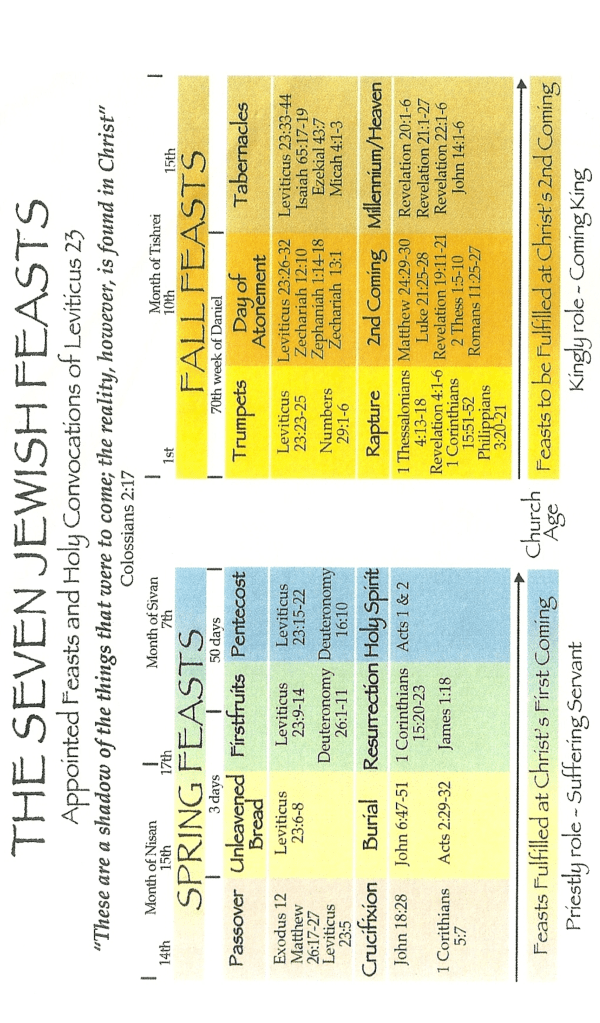
Perhaps the most difficult doctrine to believe is the Rapture of the Church. If you can believe Israel was prophesied a coming Messiah (Isaiah 7:14; 9:6; Daniel 9:26), then you can believe the Church has been promised a Second Coming of that same Messiah. “Which also said, Ye men of Galilee, why stand ye gazing up into heaven? this same Jesus, which is taken up from you into heaven, shall so come in like manner as ye have seen Him go into heaven” (Acts 1:11 KJV). But, is that a picture of the Rapture? No, it is not the Rapture. Then, what is the difference between the Rapture and the Second Coming of Jesus Christ? The Rapture and the Second Coming of Jesus Christ are two separate events. Read on to see the difference.
[This is intended as a more comprehensive read. Scan ahead to see how long. Come back later and examine the pivotal design of the Rapture.]
Question: What Scripture depicts the Rapture best?
Answer: The Rapture (Greek, harpazō) is described best in First Thessalonians 4:16-17: “16 For the Lord Himself shall descend from heaven with a shout, with the voice of the archangel, and with the trump of God: and the dead in Christ shall rise first: 17 Then we which are alive and remain shall be caught up [Greek, harpazō, caught up, violently but firmly plucked] together with them in the clouds, to meet the Lord in the air: and so shall we ever be with the Lord” (1Thessalonians 4:16-17). Rapture and Resurrection are without debate, placed together by the LORD. This cannot simply be at the point of death of the individual saint. Prophecy demands more. “It is the glory of God to conceal a thing: but the honour of kings is to search out a matter” (Proverbs 25:2).
Christ’s Parable of the Ten Virgins (Matthew 25:1-13) portrays the Rapture of the Bride of Christ:
(1) In the Jewish custom, a marriage was contracted by the parents of the bride and the bridegroom, where the parents of the bridegroom would pay a dowry to the parents of the bride. “Now He that hath wrought us for the selfsame thing is God, who also hath given unto us the earnest [Greek, arrhabōn, pledge, downpayment] of the Spirit” (2Corinthians 5:5). The Father has given His Holy Spirit as the downpayment for us to be His Son’s “bride, the Lamb’s wife” (Revelation 21:9). Both the “Spirit and the bride say, Come. And let him that heareth say, Come. And let him that is athirst come. And whosoever will, let him take the water of life freely” (22:17). Before the Rapture is consummated, there is opportunity for the Bride of Christ to be spiritually enlarged by new members of the Body of Christ.
(2) The betrothal of the Bride came through God saving us by the “precious blood of Christ, as of a lamb without blemish and without spot” (1Peter 19). We are now in the stage of awaiting the Bridegroom to come for us. “Which is the earnest [downpayment] of our inheritance until the redemption of the purchased possession, unto the praise of His glory” (Ephesians 1:14). Though the actual coming of the Bridegroom is indeterminate, it is at hand, so the Bride must be careful to be ready. Christ’s Parable of the Ten Virgins (Matthew 25) depicts the Wise Virgins as those who are ready, and the Unwise Virgins as those who were foolishly unprepared. “Therefore be ye also ready: for in such an hour as ye think not the Son of man cometh” (Matthew 24:44). Readiness involves believing and walking “in the light” (John 12:36; 1John 2:7) free of known sin, and conducting our Master’s “business” (Luke 2:49).
(3) The Marriage Supper of the Lamb would be the next stage of the Jewish ceremony; however, even before the actual Marriage Supper, the Judgment Seat of Christ (Romans 14:10) or Bema Seat Judgment (2Corinthians 5:10) would seem to coincide with the opportunity to praise the Bride to be wedded and feted. “For we must all appear before the judgment seat of Christ; that every one may receive the things done in his body, according to that he hath done, whether it be good or bad [Greek, kakos, worthless]” (2Corinthians 5:10).
Question: You say you believe in the Resurrection of the Dead in Christ. When will the Marriage Supper of the Lamb take place, if the alive and remaining Christians are caught up “to meet the Lord in the air” (1Thessalonians 4:17), who then accompany Him to defeat the Antichrist at Armageddon (Revelation 16:16), which is the Great Banquet of God (19:17 NET), feeding the flesh of the rebel kings to scavenger birds?
Answer: Scripturally, the Marriage Supper of the Lamb (Revelation 19:9) takes place directly before the Battle of Armageddon (19:16). What we know as the Second Coming of Jesus Christ is the Messiah’s return to defeat the Antichrist at Armageddon. “And He hath on His vesture and on His thigh a name written, KING OF KINGS, AND LORD OF LORDS” (19:16). The perceived difficulty is time. How can all these things take place? The answer is simple. “We are confident, I say, and willing rather to be absent from the body, and to be present with the Lord.” (2Corinthians 5:8). We change from our present dimension to the dimension of eternity. Everything promised by God can easily take place, because time will have no restriction or effect upon the outcome. God can easily Rapture Christians prior to the Beginning of the Seventieth Week of Daniel, conduct a Bema Seat Judgment, entertain the Marriage Supper of the Lamb, then complete the Second Coming Return at Armageddon, all within seven years. The catching up takes place before the Tribulation Week, while the completion of the Second Coming takes place at the End of the Seventieth Week of Daniel (Daniel 9:24-27).
Significance of the Rapture
First, the Literal Interpretation of the Word of God is the foundation of all doctrine, much less the Rapture. To be clear, the Literal Interpretation of the Word of God does not deny the use of figurative, parabolic, or poetic language; but, it insists that God is to be taken at His Word, meaning what He says, and saying what He means, as we allow for any other person. “God is not a man, that He should lie; neither the son of man, that He should repent: hath He said, and shall He not do it? or hath He spoken, and shall He not make it good” (Numbers 23:19). God’s Word is absolutely efficient in accomplishing everything He says. “So shall My word be that goeth forth out of My mouth: it shall not return unto Me void, but it shall accomplish that which I please, and it shall prosper in the thing whereto I sent it” (Isaiah 55:11).
As the amillennialists, who deny a literal Millennium is intended by the words “thousand years” (Revelation 20:2, 3, 4, 5, 6, 7); because Peter used the comparative, “one day is with the Lord as a thousand years, and a thousand years as one day” (2Peter 3:8); would they also fail to see the literalness of the Psalmist’s use of ‘thousand’ in Psalm 84? “For a day in Thy courts is better than a thousand. I had rather be a doorkeeper in the house of my God, than to dwell in the tents of wickedness” (Psalm 84:10). The Psalmist did not demand a ‘thousand’ to be the equivalent of a single ‘day.’ Neither should we force Peter to promote a ‘thousand years’ to mean only a day. Nor should we conclude John’s use of ‘thousand years’ to also mean only one day. “The premillennial return of Christ to institute a literal kingdom is the outcome of the literal method of interpretation of the Old Testament prophecies. It is only natural, therefore, that the same basic method of interpretation must be employed in our interpretation of the rapture question. It would be most illogical to build a premillennial system on a literal method and then depart from that method in consideration of the related questions. It can easily be seen that the literal method of interpretation demands a pretribulation rapture of the church” (p. 193, Things to Come: A Study in Biblical Eschatology (1965), J. Dwight Pentecost).
Second, the Doctrine of Imminency (coming at any moment) to deliver the Righteous, at Christ’s return for us, is reinforced with the Rapture, i.e., the Pre-Tribulational Rapture prior to the onset of the Seventieth Week of Daniel (Daniel 9:26). As far as can be known, the Rapture is the next thing that must be accomplished before the Tribulation Week can begin. “Waiting for the coming of our Lord Jesus Christ” (1Corinthians 1:7). “For our conversation is in heaven; from whence also we look for the Saviour, the Lord Jesus Christ” (Philippians 3:20). “The Lord is at hand” (Philippians 4:5). “Looking for that blessed hope, and the glorious appearing of the great God and our Saviour Jesus Christ” (Titus 2:13). “The Judge standeth before the door” (James 5:9). “I come quickly” (Revelation 3:11; 22:7, 12, 20).
Third, a promise of judging the earth without harming the godly (as in Lot’s deliverance from Sodom) is the promise to be kept from the ‘hour of temptation’ — not simply overcoming temptation (1Corinthians 10:13) — was and is promised to the Church of Philadelphia, of whom Christ said, “Because thou hast kept the word of My patience, I also will keep thee from the hour of temptation, which shall come upon all the world, to try them that dwell upon the earth” (Revelation 3:10). Why such a magnanimous promise? Because He is the Most Generous Master and an Utterly Capable Judge. “I know thy works: behold, I have set before thee an open door, and no man can shut it: for thou hast a little strength, and hast kept My word [obedience], and hast not denied My name [faithfulness]” (3:8). Oh, to be counted among that number!
Fourth, pray that you would be worthy to escape all the events of the Tribulation Week, as a testament to the promise of the Lord Jesus Christ. “Watch ye therefore, and pray always, that ye may be accounted worthy to escape all these things that shall come to pass, and to stand before the Son of man” (Luke 21:36). Though Pre-Tribulation Rapture adherents defend the concept of salvation by grace through faith, they must consistently abide by the literalness of Christ’s Luke 21:36 commandment with promise to watch and pray that we “may be accounted worthy to escape all these things that shall come to pass” (21:36), i.e., through a Pre-Tribulational Rapture. Remember, “faith without works is dead” (James 2:20).
Fifth, our hope is in the Lord (Psalm 146:5), but thank God, He has emboldened us through His promise of Rapture and Deliverance, as we see the disintegration of the world around us. “But evil people and charlatans will go from bad to worse, deceiving others and being deceived themselves” (2Timothy 3:13 NET). We shrink not from admitting the boldness and hope produced by the Doctrine of the Rapture. “Looking for that blessed hope, and the glorious appearing of the great God and our Saviour Jesus Christ” (Titus 2:13).
Sixth, the Rapture solves a problem, not viewed by most as a problem. How does flesh and blood inherit eternity? Well, of course, God simply makes it to happen, when it is needed. Quite correct. But, can the Rapture be such an obvious solution? “Now this I say, brethren, that flesh and blood cannot inherit the kingdom of God; neither doth corruption inherit incorruption. Behold, I shew you a mystery; We shall not all sleep, but we shall all be changed, In a moment, in the twinkling of an eye, at the last trump: for the trumpet shall sound, and the dead shall be raised incorruptible, and we shall be changed. For this corruptible must put on incorruption, and this mortal must put on immortality” (1Corinthians 15:50-53). The Rapture is the means to accomplish this inheriting eternity “in the twinkling of an eye” (15:52). Thank you, Chuck Missler, for reminding of this thought (from The Rapture: Christianity’s Most Preposterous Belief).
Seventh, the Church Age ends where Daniel’s Seventieth Week starts again. Most prophetic confusion comes from mixing or replacing the Church for Israel. When Scripture explicitly grants the New Covenant, made to Israel (Ezekiel 36:27) to be inherited also by the Gentiles, then no confusion takes place. But, when Daniel’s Seventieth Week begins, the Church Age has ended, since the Church has departed in the Pre-Tribulational Rapture. So, the Rapture returns the focus to Israel, who has been blinded since their rejection of Messiah Jesus (Romans 11:25). “O Jerusalem, Jerusalem, thou that killest the prophets, and stonest them which are sent unto thee, how often would I have gathered thy children together, even as a hen gathereth her chickens under her wings, and ye would not” (Matthew 23:37).
Eighth, no Resurrection without the Rapture, and no Rapture without the Resurrection. “For the Lord Himself shall descend from heaven with a shout, with the voice of the archangel, and with the trump of God: and the dead in Christ shall rise first: Then we which are alive and remain shall be caught up together with them in the clouds, to meet the Lord in the air: and so shall we ever be with the Lord” (1Thessalonians 4:16-17). Debates about the Rapture would be reduced or eliminated, if the timing of the Rapture had to coincide with the Resurrection, which is what the above Sixth Point references.
Ninth, no Church in the Seventieth Week of Daniel, and no Seventieth Week of Daniel with the Church. Ekklēsia (Greek, church) does not appear outside of Christ’s Seven Letters to the Churches in Revelation 2 and 3, except in the plural (22:16) as part of the epilogue at the end of the Revelation. The Church is absent from the discussions of the remaining 19 chapters of the Book of Revelation. Why? Because the Church has been Raptured. Immediately after the invitation given to the Church of Laodicea, the door promised to the faithful Church of Philadelphia, is offered even to Lukewarm Laodicea, of whom nothing good is said. To Laodicea: “Behold, I stand at the door, and knock: if any man hear My voice, and open the door, I will come in to him, and will sup with him, and he with Me” (Revelation 3:20). Notice, immediately after the invitation is given to Lukewarm Laodicea, Revelation 4:1 begins with, “After this I looked, and, behold, a door was opened in heaven: and the first voice which I heard was as it were of a trumpet talking with me; which said, Come up hither, and I will shew thee things which must be hereafter” (Revelation 4:1).
No guarantee that any or all Lukewarm Professors of the Christian Religion repented of their lukewarmness, but it is notable that Christ cared enough to make the offer, to make it with the same door of deliverance from the “hour of temptation, which shall come upon all the world” (3:10), then He opens the door with the Rapture. “After this I looked, and, behold, a door was opened in heaven: and the first voice which I heard was as it were of a trumpet talking with me; which said, Come up hither, and I will shew thee things which must be hereafter” (4:1). Also, notice the phrase, “Come Up Hither” (4:1), coinciding with a Pre-Tribulational Rapture, appears again in the Resurrection of the Two Witnesses, when they are Raptured into Heaven in the presence of the entire world (11:12). The Two Witnesses are first resurrected from the dead, then they are raptured; so, understandably, some term this a Pre-Wrath Rapture. And, their Enoch-like (OT, previously translated without physical death), Moses-like (called down plagues on Egypt), or Elijah-like (OT, previously translated without physical death) ministry of calling down judgments upon the earth are immediately positioned before the Seventh Trumpet Judgment (11:15). But still, notice the absence of the Church in the Tribulation.
Tenth, the Rapture of the Church accomplishes what the Apostle Paul said, “I will provoke you to jealousy by them that are no people, and by a foolish nation I will anger you” (Romans 10:19). In other words, the Gentile world, chiefly through the Church, will arouse the obstinate Jew to jealousy, because the Church escaped the Wrath of God of the Tribulation Week, which they now face. “I say then, Have they stumbled that they should fall? God forbid: but rather through their fall salvation is come unto the Gentiles, for to provoke them to jealousy” (11:11). Our Salvation and Rapture will ultimately provoke the Jew and Israel to jealousy and finally to repentance. This is part of God’s masterplan to win back Israel. “O the depth of the riches both of the wisdom and knowledge of God! how unsearchable are His judgments, and His ways past finding out!” (11:33). Pray for all men; but especially, pray for the salvation of Israel. God most certainly will answer!
Eleventh, the Restraining Influence of the Holy Spirit will obviously be removed, when all the Spirit Indwelt people are removed at the Rapture. “For the mystery of lawlessness is already at work; only He [the Holy Spirit] who now restrains will do so until He [the Holy Spirit] is taken out of the way” (2Thessalonians 2:7 NKJV). This will have the effect: (1) The right action promoted by the Holy Spirit with all humanity, will be felt less because the Christians are removed from the world, and (2) Satan will have to immediately offset this with “signs and lying wonders” (2Thessalonians 2:8-9). Remember, the bizarreness and outlandishness of the imagination will be available to the Wicked One, since the Holy Spirit has withdrawn His people to represent truthful opposition to Antichrist’s lie, that He is the God of the Universe. “And then shall that Wicked [Antichrist] be revealed, whom the Lord shall consume with the spirit of His mouth, and shall destroy with the brightness of His coming: Even him [Antichrist], whose coming is after the working of Satan with all power and signs and lying wonders” (2Thessalonians 2:8-9).
Twelfth, the Rapture clearly distinguishes between Israel and the Church. The initial difficulty of the Apostles to comprehend the nature and scope of their present circumstances, i.e., do you need to become a Jew first before you become a Christian, illustrated the learning necessary to function in this Church Age. Debate as to who is “in Jesus” (1Thessalonians 4:14) or “in Christ” (4:16) “which are alive and remain” (4:17), are determined by our appreciation of the nature of faith. But, Spiritual Israel is now part of the Spiritual Church. Paul understandably answered the concerns of the Early Church over the reluctance of the nation of the Jews to admit Jesus to be their Messiah. Israel is temporarily relegated to a status of Blindness — but, not forgotten. “For I would not, brethren, that ye should be ignorant of this mystery, lest ye should be wise in your own conceits; that blindness in part is happened to Israel, until the fulness of the Gentiles be come in” (Romans 11:25). The Rapture is about the Church. The Second Coming is more about Israel. “And His [Messiah Jesus] feet shall stand in that day upon the mount of Olives, which is before Jerusalem on the east, and the mount of Olives shall cleave in the midst thereof toward the east and toward the west, and there shall be a very great valley; and half of the mountain shall remove toward the north, and half of it toward the south” (Zechariah 14:4).
NOTE: I have previously posted representing the Rapture as only a part of the Second Coming, which is more attractive to those who barely admit to the Rapture as an eschatological event. However, I would like to correct that emphasis. The Rapture (1Thessalonians 4:17) is a distinct and separate event from the Second Coming (Revelation 19:11-21), and both the Lord Jesus Christ and the Antichrist are well aware of the difference. A time separation between the two events of about seven years of a Tribulation Week (Daniel 9:24-27, especially v. 27) is sufficient for the prophesied events of Revelation 4 through 19 to take place. The Rapture is a Blessed Hope (Titus 2:13) for the Saints Departed and the Church Remaining to be reunited and gathered to their Lord, while the Second Coming is a fearful time of judgment and “fiery indignation” (Hebrews 9:27) upon those, who reject the KING OF KINGS, AND LORD OF LORDS. Honesty compels me to change my position, as often as I receive increased light or understanding to “grow in grace, and in the knowledge of our Lord and Saviour Jesus Christ” (2Peter 3:18).
Father, Your plans for the Church are “exceeding abundantly above all that we ask or think, according to the power that worketh in us” (Ephesians 3:20). Thank You for showing us how we rightly have this Blessed Hope of the Rapture. Fortify us that we may be “stedfast, unmoveable, always abounding in the work of the Lord, forasmuch as [we] know that [our] labour is not in vain in the [You]” (1Corinthians 15:58). Lord Jesus, return quickly. In Jesus’ name, amen.
 We Need A Miracle

You must be logged in to post a comment.