Jesus the I Am, Peter the I Am Not, and Judas the You Don’t Want to Be Me
Christ Our Example, Peter Our Reality, and Judas Our Warning
John 18 (NIV)
Betrayal and Arrest of Jesus (18:1-12)
1 When He had finished praying, Jesus left with His disciples and crossed the Kidron Valley. On the other side there was a garden, and He and His disciples went into it.
The Kidron Valley is a wadi or arroyo immediately east of Jerusalem through which the seasonal, winter Brook Kidron flows towards the Dead Sea.
David passed over the Kidron Valley, when he fled from Absalom (2Samuel 15:23).
The Brook Kidron was also used as a spiritually toxic waste dump, when Hezekiah cleansed the Temple from idolatry. “They removed the altars in Jerusalem and cleared away the incense altars and threw them into the Kidron Valley” (2Chronicles 30:14).
The location of graves in the Kidron Valley led some to identify it as the Valley of the Dry Bones of Ezekiel 37.
“Garden” is also translated as “orchard,” since Gethsemane, in the Greek, means “oil press.” In modern times, olive trees are located there at the foot of the Mount of Olives. The Kidron Valley, separates the Old City from the Mount of Olives.
2 Now Judas, who betrayed Him, knew the place, because Jesus had often met there with His disciples.
Judas the betrayer knew the place. Jesus intended to keep His appointment for the Cross, or he would not have chosen such a familiar location for Judas to find Him. Remember, he had just scheduled this appointment with Judas Iscariot at the Last Supper. “What you are about to do, do quickly” (John 13:27 NIV).
Jesus met with His disciples, in a “garden” (John 18:1 NIV) identified by Matthew and Mark as Gethsemane (Matthew 26:36; Mark 14:32). Why the need of meeting and gathering? Obviously, God is capable of meeting anyone anywhere in the privacy of our heart, but face-to-face contact has long been the preeminent form of social interaction encouraged by the LORD for His disciples for the benefit of the Body of Christ. “Not giving up meeting together, as some are in the habit of doing, but encouraging one another — and all the more as you see the Day approaching [of the coming destruction of Jerusalem then, and our Lord’s soon return now]” (Hebrews 10:25). Like Jesus, we should meet together with disciples for our mutual encouragement.
3 So Judas came to the garden, guiding a detachment of soldiers and some officials from the chief priests and the Pharisees. They were carrying torches, lanterns and weapons.
We have been warned. Even a gathering of disciples led by the dynamic presence of Jesus can produce a Judas Iscariot. Betrayal and apostasy are always possible; after all, Lucifer was able to lead a rebellion against the Almighty in the perfect circumstances of Heaven. Either, an All Wise God is still wise and will ultimately win all, or the Serpent is right, you can’t trust the LORD, since the Creator will ultimately lose. But, we know God is not mocked. “The horse is made ready for the day of battle, but victory rests with the Lord” (Proverbs 21:31).
Jesus always treated Judas as a neighbor. Matthew records Jesus even calling him “friend” (25:20) at Gethsemane, knowing his predatory nature. The incurability of Judas’ apostasy was simply Jesus’ foreknowledge that Judas would never repent. Concerning those like Judas, who may or may not finally repent, the Epistle of Jude implores us to “be merciful to those who doubt; save others by snatching them from the fire; to others show mercy, mixed with fear — hating even the clothing stained by corrupted flesh” (Jude 1:20-23). Jesus would have saved even Judas had he finally repented.
Do not make the mistake of Judas.
Jesus is the Messiah, and He will win the battle.
Martin Luther said it well in that great hymn of the Reformation, “A Mighty Fortress Is Our God” (1529):
Did we in our own strength confide, our striving would be losing,
We’re not the right Man on our side, the Man of God’s own choosing:
Dost ask who that may be? Christ Jesus it is He;
Lord Sabaoth, His Name, from age to age the same,
AND HE MUST WIN THE BATTLE.
A detachment of Roman soldiers was a cohort of between 400 and 600 foot soldiers. “Officials from the chief priests and the Pharisees” (John 18:3) were all there to exact their vengeance upon Jesus for describing their religion as hypocrisy. “Woe to you, teachers of the law and Pharisees, you hypocrites! You shut the door of the kingdom of heaven in people’s faces. You yourselves do not enter, nor will you let those enter who are trying to” (Matthew 23:13). Imagine the preposterousness of carrying a torch or lantern to find Jesus, the “Light of the world” (John 8:12). Or, lifting a weapon and expecting to succeed against the Almighty!
4 Jesus, knowing all that was going to happen to Him, went out and asked them, “Who is it you want?”
Jesus knew the answer before He asked or they answered, but why didn’t the Jews realize Jesus was their Messiah? They were looking more for deliverance from the Romans than deliverance from their sins. And, what are we looking for? “So Christ was sacrificed once to take away the sins of many; and He will appear a second time, not to bear sin, but to bring salvation [literally, deliverance] to those who are waiting for Him” (Hebrews 9:28). A Second Time signified the deliverance from AD 70 Rome then, and prophetically, from Antichrist at our Lord’s Return.
5 “Jesus of Nazareth,” they replied. “I am He,” Jesus said. (And Judas the traitor was standing there with them.)
Jesus replied, “I am,” the same as Jehovah replied to Moses. “I am who I am. This is what you are to say to the Israelites: I am has sent Me to you” (Exodus 3:14). Jesus continually proclaimed His divinity to those who were listening.
6 When Jesus said, “I am He,” they drew back and fell to the ground.
Some say they were simply startled and fell to the ground, but a “detachment” (John 18:3) or cohort of between 400 and 600 soldiers all falling to the ground is more significant than someone slipping. “The voice of the Lord is powerful; the voice of the Lord is majestic. The voice of the Lord breaks the cedars; the Lord breaks in pieces the cedars of Lebanon” (Psalm 29:4-5).
7 Again He asked them, “Who is it you want?” “Jesus of Nazareth,” they said.
No waste of words. Jesus was simply emphasizing the extreme evil of the situation, or as Luke recorded Jesus saying, “But this is your hour — when darkness reigns” (Luke 22:53).
8 Jesus answered, “I told you that I am He. If you are looking for Me, then let these men go.”
Jesus is always the Good Shepherd and cares for us. “Then Jesus told them, This very night you will all fall away on account of Me, for it is written: I will strike the shepherd, and the sheep of the flock will be scattered” (Matthew 26:31). Jesus made possible the release of His disciples from the soldiers without an altercation.
9 This happened so that the words He had spoken would be fulfilled: “I have not lost one of those you gave Me.”
We are safe in the hands of our Good Shepherd Jesus, when our confidence is in Him. Let not the enemy shake your confidence. “I give them eternal life, and they shall never perish; no one will snatch them out of My hand. My Father, who has given them to Me, is greater than all; no one can snatch them out of My Father’s hand” (John 10:28-29).
10 Then Simon Peter, who had a sword, drew it and struck the high priest’s servant, cutting off his right ear. (The servant’s name was Malchus.)
Recall that Jesus already had a discussion with Peter about his right to keep and bear arms. Jesus never questioned the rightness of self-defense, only the inadequacy of unneeded weaponry. “He said to them, “But now if you have a purse, take it, and also a bag; and if you don’t have a sword, sell your cloak and buy one. It is written: ‘And he was numbered with the transgressors’; and I tell you that this must be fulfilled in Me. Yes, what is written about Me is reaching its fulfillment.” The disciples said, “See, Lord, here are two swords.” “That’s enough [literally, sufficient]!” He replied” (Luke 22:36-38).
A promise for servants of Jesus about our confidence for self-defense is: “Some trust in chariots and some in horses, but we trust in the name of the Lord our God” (Psalm 20:7).
11 Jesus commanded Peter, “Put your sword away! Shall I not drink the cup the Father has given Me?“
Why did Jesus authorize Peter to carry the sword, only to tell Peter to put it away? Perhaps He wanted to make the point to Peter and us that the right to keep and bear arms must be accompanied by a clear mandate to use it. In this instance, Peter was instructed to sheath his sword. We are told by Luke that the servant Malchus (John 18:10) was promptly healed by Jesus (Luke 22:51). Remember also, the citizen soldiers of OT Israel proclaimed, “A sword for the Lord and for Gideon!” (Judges 7:20) in their defeat of the invading Midianites.
12 Then the detachment of soldiers with its commander and the Jewish officials arrested Jesus. They bound Him
Make no mistake, the power of secular government is not to be trifled with. They “do not bear the sword for no reason” (Romans 13:4). Being bound or imprisoned is a real deterrent; but, we will be set free like Samson or Paul, if disciples pray and God wills it.
Jesus Faces Annas and Caiaphas (18:13-14)
13 and brought Him first to Annas, who was the father-in-law of Caiaphas, the high priest that year.
Annas had been formerly the high priest and was now replaced by his son-in-law Caiaphas. High priests were traditionally for life — like American Supreme Court justices. Possibly Rome replaced Annas to prevent any high priest from accumulating too much power.
14 Caiaphas was the one who had advised the Jewish leaders that it would be good if one man died for the people.
Caiaphas had formerly suggested one man should die for the Nation (John 11:50). How true was his suggestion, but for entirely the wrong reason. He wanted a scapegoat, so the Romans wouldn’t blame them for any uproar. The Almighty masterfully arranged things so killing Jesus was the best thing they would want to do. “None of the rulers of this age understood it, for if they had, they would not have crucified the Lord of glory” (1Corinthians 2:8).
Peter Denies Jesus (18:15-17)
15 Simon Peter and another disciple were following Jesus. Because this disciple was known to the high priest, he went with Jesus into the high priest’s courtyard,
“Another disciple” (18:15) was John’s dismissive description of himself. “Let someone else praise you, and not your own mouth; an outsider, and not your own lips” (Proverbs 27:2). John had some connection to the high priest, which we don’t understand. God will do the unexpected. “And I will bring the blind by a way that they knew not; I will lead them in paths that they have not known: I will make darkness light before them, and crooked things straight. These things will I do unto them, and not forsake them” (Isaiah 42:16).
16 but Peter had to wait outside at the door. The other disciple, who was known to the high priest, came back, spoke to the servant girl on duty there and brought Peter in.
Peter finally made it inside to see what was happening to Jesus but at the cost of being recognized. At this time of sheer terror, Peter probably couldn’t explain why he had to risk his safety to find out what was happening to Jesus in the palace of the high priest, but we know now he needed to be there to fulfill the prophecy that he would deny Jesus. Since Peter did not comprehend the prophecies concerning the need for the Messiah’s sacrificial death, he became a victim of prophecy. After the Resurrection of our Savior, Jesus encountered two disciples on the Road to Emmaus. He asked them why they were so unhappy. Upon hearing their sad tale about the disappointing death of Jesus, He told them, “How foolish you are, and how slow to believe all that the prophets have spoken! Did not the Messiah have to suffer these things and then enter His glory?” (Luke 24:25-26). We, too, need to study the prophecies about the soon return of the Lord Jesus Christ that we also may avoid becoming victims of prophecy.
17 “You aren’t one of this man’s disciples too, are you?” she asked Peter. He replied, “I am not.”
Peter didn’t have to prove his lack of affiliation with Jesus. He only had to affirm, I am not (John 18:17). It is much harder to develop a cover story of what you want people to think than simply to make an affirmation. We are testifying constantly of the truth. We don’t need a better cover story, only Spirit filled circumstances to providentially witness for Jesus. “But you will receive power when the Holy Spirit comes on you; and you will be My witnesses in Jerusalem, and in all Judea and Samaria, and to the ends of the earth” (Acts 1:8).
Peter’s denial of Christ immediately put him in opposition to Jesus, who said, “But whoever disowns Me before others, I will disown before My Father in heaven” (Matthew 10:33). Not good for Peter, unless he repented, which of course, he did.
The High Priest Questions Jesus (18:18-24)
18 It was cold, and the servants and officials stood around a fire they had made to keep warm. Peter also was standing with them, warming himself.
John, the writer of this Gospel, was familiar with the weather on a cold spring evening in Jerusalem, being about 2,500 feet above sea level. Peter was standing around a fire of coals to benefit from the heat, satisfying his curiosity about the fate of Jesus, while concealing his identity. We need to always stay disciplined, “fixing our eyes on Jesus” (Hebrews 12:2), while in this world, because the enemy wants us to withdraw our allegiance from Christ by gradually warming up to the allurements of the world.
19 Meanwhile, the high priest questioned Jesus about His disciples and His teaching.
God’s Spirit is open to all honest questions concerning the faith. “Now the Berean Jews were of more noble character than those in Thessalonica, for they received the message with great eagerness and examined the Scriptures every day to see if what Paul said was true” (Acts 17:11). Only when God is being questioned dishonestly, will one never arrive at the truth. “Always learning but never able to come to a knowledge of the truth” (2Timothy 3:7).
20 “I have spoken openly to the world,” Jesus replied. “I always taught in synagogues or at the temple, where all the Jews come together. I said nothing in secret.
Without claiming His rights from Mosaic law of the necessity of two or three eyewitnesses to give testimony to establish any matter (Deuteronomy 19:15), much less, a crime requiring the death penalty (17:6), Jesus was presenting a logical case for Himself.
21 Why question Me? Ask those who heard Me. Surely they know what I said.”
John’s Gospel does not tell us that the Jews were attempting to assemble testimony against Jesus. But, those false witnesses could not initially agree on what Jesus said (Mark 14:56).
22 When Jesus said this, one of the officials nearby slapped Him in the face. “Is this the way You answer the high priest?” he demanded.
Slapping Jesus was a form of corporal punishment assuming the guilt of Jesus before legally establishing it. Mosaic law demanded the assumption of innocence until proven guilty. “15 One witness is not enough to convict anyone accused of any crime or offense they may have committed. A matter must be established by the testimony of two or three witnesses. 16 If a malicious witness takes the stand to accuse someone of a crime, 17 the two people involved in the dispute must stand in the presence of the Lord before the priests and the judges who are in office at the time. 18 The judges must make a thorough investigation, and if the witness proves to be a liar, giving false testimony against a fellow Israelite, 19 then do to the false witness as that witness intended to do to the other party. You must purge the evil from among you” (Deuteronomy 19:15-19).
23 “If I said something wrong,” Jesus replied, “testify as to what is wrong. But if I spoke the truth, why did you strike Me?”
John is presenting Jesus’ case the way any non-Jew could follow and sympathize. When Jesus straightforwardly asks for testimony against His alleged wrong doing, and is struck, then “why did you strike Me?” (18:23).
24 Then Annas sent Him bound to Caiaphas the high priest.
Again, John’s narration does not focus on the illegality of condemning Jesus guilty of death for blasphemy (Leviticus 24:16), when Jesus clearly claimed to be the Messiah, which He was.
“61 But Jesus remained silent and gave no answer. Again the high priest asked Him, Are you the Messiah, the Son of the Blessed One? 62 I am, said Jesus. And you will see the Son of Man sitting at the right hand of the Mighty One and coming on the clouds of heaven. 63 The high priest tore his clothes. Why do we need any more witnesses? he asked. 64 You have heard the blasphemy. What do you think? They all condemned Him as worthy of death” (Mark 14:61-64).
The irony of the situation was Jesus was guilty of blasphemy but only if He wasn’t God.
Peter Denies Jesus Again (18:25-27)
25 Meanwhile, Simon Peter was still standing there warming himself. So they asked him, “You aren’t one of His disciples too, are you?” He denied it, saying, “I am not.”
As Jesus is the Great I Am, we are or have been much like Peter, the Great I Am Not. Thank God that was not what we remember Peter for. “And that is what some of you were. But you were washed, you were sanctified, you were justified in the name of the Lord Jesus Christ and by the Spirit of our God” (1Corinthians 6:11).
26 One of the high priest’s servants, a relative of the man whose ear Peter had cut off, challenged him, “Didn’t I see you with Him in the garden?”
We don’t normally sin in isolation. Unless our conscience stings us and we immediately repent, we will have an increasingly bad day. Best to repent and fix things quickly before it gets complicated. Children and parents, husbands and wives, brothers and sisters, resolve your differences quickly. “Do not let the sun go down while you are still angry, and do not give the devil a foothold” (Ephesians 4:26-27). Be more concerned about giving the devil a foothold in attacking God for having quarreling children like us than defending an affront against our rights over someone else’s rights. Defend God, and let God defend us.
27 Again Peter denied it, and at that moment a rooster began to crow.
Peter was the mentor to John Mark, the writer of the Gospel of Mark; so, Mark’s record of the words of Jesus, “Before the cock crows twice thou shalt deny me thrice” (Mark 14:30 KJV), was a detailed, first hand account from Peter’s perspective. Cock crowing was generally a period between 3 AM and dawn. Or more specifically, Jesus was referring to Peter’s third denial taking place by dawn, where a rooster crows normally twice in rapid succession.
Jesus Before Pilate (18:28-32)
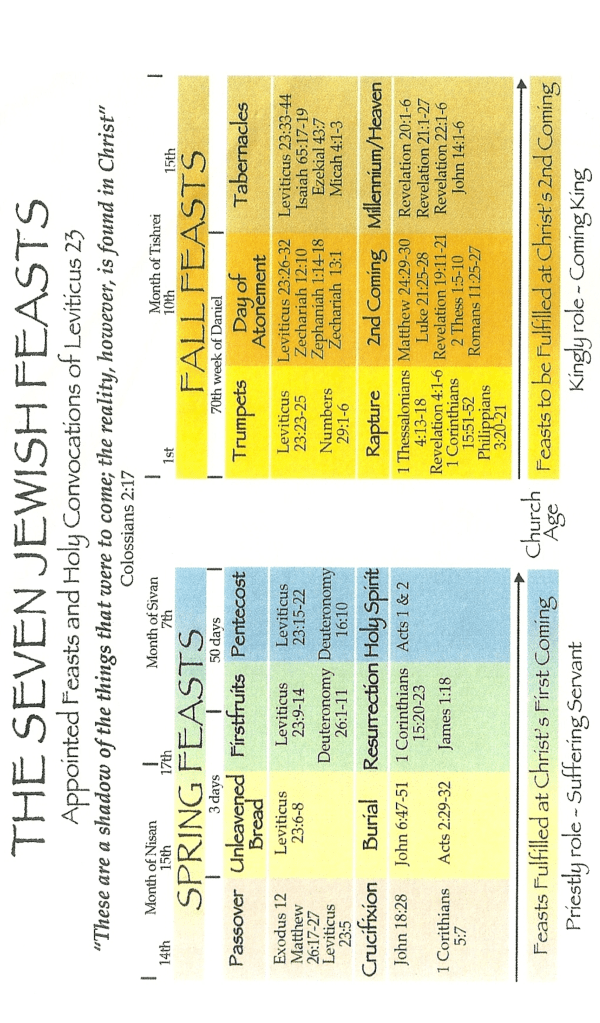
28 Then the Jewish leaders took Jesus from Caiaphas to the palace of the Roman governor. By now it was early morning, and to avoid ceremonial uncleanness they did not enter the palace, because they wanted to be able to eat the Passover.
The Sanhedrin already had their verdict of blasphemy against Jesus. They only needed Pilate’s permission to execute Him by Roman crucifixion. They strained at a gnat by keeping themselves ceremonially clean to eat the Passover, only to swallow a camel by crucifying the Messiah.
29 So Pilate came out to them and asked, “What charges are you bringing against this man?”
As a Gentile, Pilate was not interested in Jewish ceremonial law until it affected the Pax Romana — the peace of Rome.
30 “If He were not a criminal,” they replied, “we would not have handed Him over to you.”
Pilate was not interested in the trivialities of tribal disputes. He knew there probably was a Mosaic law about everything. “Keep My decrees and laws, for the person who obeys them will live by them. I am the Lord” (Leviticus 18:5). Even present day Christians have that same suspicion. “Man shall not live on bread alone, but on every word that comes from the mouth of God” (Matthew 4:4).
Pilate was appointed to keep Roman law not Mosaic law. He had better things to do with his time.
31 Pilate said, “Take Him yourselves and judge Him by your own law.” “But we have no right to execute anyone,” they objected.
The Jews got Pilate’s Roman attention, when they announced their intention of executing a criminal. This is the one Pilate’s wife was warning him about. “While Pilate was sitting on the judge’s seat, his wife sent him this message: Don’t have anything to do with that innocent man, for I have suffered a great deal today in a dream because of him” (Matthew 27:19).
32 This took place to fulfill what Jesus had said about the kind of death He was going to die.
Jesus was not to die from Jewish stoning, but from Roman crucifixion, fulfilling the OT prophecy, “they pierce my hands and my feet” (Psalm 22:16).
My Kingdom Is Not of This World (18:33-40)
33 Pilate then went back inside the palace, summoned Jesus and asked Him, “Are you the king of the Jews?”
Where did Pilate get the idea Jesus was the King of the Jews, for he would later have it written on a notice and fastened to the cross of Jesus (John 19:19). Didn’t the Babylonian Magi come from the east several decades earlier asking King Herod, “Where is the one who has been born king of the Jews? We saw His star when it rose and have come to worship Him” (Matthew 2:2)? Pilate certainly heard about what we now call the Triumphal Entry of Christ only days earlier. “As He went along, people spread their cloaks on the road. When He came near the place where the road goes down the Mount of Olives, the whole crowd of disciples began joyfully to praise God in loud voices for all the miracles they had seen: Blessed is the king who comes in the name of the Lord! Peace in heaven and glory in the highest!” (Luke 19:36-38). A Roman procurator like Pilate would undoubtedly remember the name of anyone a public crowd would hail as King of the Jews.
34 “Is that your own idea,” Jesus asked, “or did others talk to you about Me?”
Jesus gave Pilate an opportunity to probe whether King of the Jews meant anything more than political noise. Pilate’s wife had even interceded for Jesus declaring Him an innocent man. This was all very unsettling, when he was the one in charge for Rome.
35 “Am I a Jew?” Pilate replied. “Your own people and chief priests handed You over to me. What is it You have done?”
Pilate’s reply meant he had a problem, forcing him to make a decision, which he’d rather not. He sounded like a public administrator being forced to take sides in a divisive question with consequences far beyond what he is prepared to handle. Remember the advice of Jesus, when you seek your next promotion. “From everyone who has been given much, much will be demanded; and from the one who has been entrusted with much, much more will be asked” (Luke 12:48).
36 Jesus said, “My kingdom is not of this world. If it were, My servants would fight to prevent my arrest by the Jewish leaders. But now My kingdom is from another place.”
Notice John has devoted considerable space to this conversation with Pilate, who represents the vast Gentile population of those reading this Gospel. Jesus had already addressed His initial Jewish audience with the Sermon on the Mount (Matthew 5-7), but now the Holy Spirit is addressing this invitation to the world (John 3:16) to participate in the Kingdom of God.
Jesus had to make clear to Pontius Pilate and the world. “My kingdom is not of this world” (John 18:36). Everything we do to perpetuate our existence in this world is not why we are here. Children must be taught their ABCs to grasp the world around them. But, “when I was a child, I spake as a child, I understood as a child, I thought as a child: but when I became a man, I put away childish things” (1Corinthians 13:11 KJV).
We eat to live, but we do not live to eat.
Pilate had his opportunity about two-thousand years ago to participate in the Kingdom of God.
Participation is not membership in an organization to gain club benefits to use or refuse.
Participation in the Kingdom of God is commitment to God in a living relationship with Jesus Christ. As Jesus said, “I am the vine; you are the branches. If you remain in Me and I in you, you will bear much fruit; apart from Me you can do nothing” (John 15:5).
37 “You are a king, then!” said Pilate. Jesus answered, “You say that I am a king. In fact, the reason I was born and came into the world is to testify to the truth. Everyone on the side of truth listens to Me.”
Pilate’s eyes lighted up, when Jesus spoke of His Kingdom. “So, You are a king!” Pilate exclaimed. Jesus quickly disabused Pilate of any more political dialogue by pointing at His purpose for coming into the world. “The reason I was born and came into the world is to testify of the truth” (John 18:37).
What’s Your point?
“Everyone on the side of truth listens to Me” (John 18:37).
Jesus demands exclusive and absolute devotion.
38 “What is truth?” retorted Pilate. With this he went out again to the Jews gathered there and said, “I find no basis for a charge against Him.
Like a petulant child tiring of the conversation, Pilate retorts, “What is truth?” (18:37), having made up his mind. Like a Roman administrator, he tells the Jews, “I find no basis for a charge against Him” (18:37), which should have released Jesus.
39 But it is your custom for me to release to you one prisoner at the time of the Passover. Do you want me to release the king of the Jews?”
Pilate understood politics, so he attempted to placate the Jews by offering them the opportunity to take back their demand for the execution of Jesus. Again, our Heavenly Father masterfully arranged the circumstances so it was not possible for Pilate to release Jesus.
If Pilate released Jesus, he could have a mob of over a million people in attendance to the feasts out of control.
Easier to kill the Truth than for Rome to replace Pilate.
40 They shouted back, “No, not Him! Give us Barabbas!” Now Barabbas had taken part in an uprising.”
Barabbas was a robber and an insurrectionist. Not an upstanding member of the community. But, Pilate was deciding Barabbas was the lesser of two evils. The evil of Jesus was only Pilate’s conscience and the protests of his wife.
But, the question remains for the vast audience of readers of the Gospel of John, “What shall I do, then, with Jesus who is called the Messiah?” (Matthew 27:22).


You must be logged in to post a comment.